
Professional illustration about Meta
Meta in 2025: Key Trends
Meta in 2025: Key Trends
As we navigate 2025, Meta continues to redefine the digital landscape with groundbreaking innovations across its ecosystem. One of the most notable trends is the rapid evolution of AR wearables, particularly the Ray-Ban Meta smart glasses, which now integrate Meta AI for seamless voice commands, real-time translations, and contextual information overlays. These AI glasses are no longer just a novelty—they’re becoming essential tools for professionals, creators, and everyday users who want hands-free access to digital content. Meanwhile, VR headsets like the Meta Quest 3 (and rumors of a Quest 4) are pushing the boundaries of immersive experiences, with hyper-realistic graphics, advanced haptics, and enterprise applications in training, healthcare, and remote collaboration.
On the social media front, Facebook and Instagram are doubling down on augmented reality features, enabling brands to create interactive ads and virtual try-ons that boost customer engagement. The Meta Business Suite has also seen significant upgrades, offering smarter analytics, AI-driven ad optimizations, and streamlined social media marketing workflows. Small businesses can now leverage Meta for Business tools to automate lead generation, track ROI, and build brand awareness more effectively than ever.
Another game-changer is Meta’s investment in the metaverse, where virtual workspaces and social hubs are gaining traction. Platforms like Horizon Worlds are evolving into vibrant communities for community building, networking, and even job search opportunities. Companies are hosting virtual career fairs, and remote teams are using Meta’s VR meeting spaces to foster company culture in a digital-first world.
Messaging apps like WhatsApp and Messenger are also integrating deeper AI functionalities, such as chatbot-powered customer support and personalized shopping experiences. For instance, businesses can now use WhatsApp’s AI tools to automate responses, send targeted promotions, and even process payments—all within the app.
Here’s what these trends mean for users and businesses in 2025:
- AR/VR Adoption: Whether it’s Ray-Ban AI glasses for on-the-go productivity or Meta Quest for immersive training, AR/VR is moving beyond gaming into everyday utility.
- AI-Powered Marketing: Brands that harness Meta AI for hyper-personalized ads and chatbots will see higher conversion rates and customer engagement.
- Metaverse Readiness: Early adopters of virtual workspaces and events will have a competitive edge in digital advertising and business management.
- Messaging Commerce: WhatsApp and Messenger are becoming full-fledged sales channels, blurring the lines between social media and e-commerce.
Meta’s 2025 strategy clearly revolves around merging physical and digital worlds through technology innovation. From augmented reality wearables to AI-driven business tools, the company is shaping how we work, connect, and shop—making it crucial for individuals and brands to stay ahead of these trends.

Professional illustration about WhatsApp
Meta AI Advancements
Meta AI Advancements in 2025: Transforming Social Media, Business, and Wearable Tech
Meta’s AI innovations in 2025 are reshaping how users interact with its ecosystem—from Facebook and Instagram to WhatsApp, Messenger, and cutting-edge hardware like Ray-Ban Meta smart glasses and Meta Quest VR headsets. At the core of these advancements is Meta AI, a suite of intelligent tools leveraging augmented reality (AR) and virtual reality (VR) to create seamless, personalized experiences. For instance, AI-powered customer engagement features now automate responses in Messenger and WhatsApp, enabling businesses to resolve queries faster while maintaining a human-like touch. Meanwhile, Meta for Business integrates AI-driven analytics into the Meta Business Suite, helping brands optimize social media marketing campaigns by predicting trends and refining ad targeting in real time.
One standout innovation is the evolution of Ray-Ban AI glasses, which now feature advanced AR wearables capabilities like real-time language translation and contextual object recognition—ideal for travelers or professionals in global industries. These glasses sync with Meta’s metaverse initiatives, allowing wearers to overlay digital information onto physical spaces, from navigation prompts to interactive product demos. On the VR front, Meta Quest headsets have become indispensable for remote collaboration, offering hyper-realistic avatars and spatial audio that bridge gaps in company culture for distributed teams.
For marketers, Meta AI is a game-changer in digital advertising. Algorithms now analyze user behavior across Facebook and Instagram to deliver hyper-personalized ad placements, boosting brand awareness and lead generation. Small businesses, in particular, benefit from AI-curated content suggestions in the Meta Business Suite, which streamline community building by identifying high-engagement post formats and optimal posting times. Additionally, Meta’s job search tools use AI to match candidates with openings based on skills and cultural fit, revolutionizing recruitment in the platform’s ecosystem.
Behind the scenes, Meta AI is also tackling challenges like content moderation, using deep learning to detect harmful material faster than human reviewers. This not only enhances platform safety but also fosters trust—a critical factor for customer engagement. As technology innovation accelerates, Meta’s focus on AI glasses, VR headsets, and intelligent business tools solidifies its position as a leader in blending the physical and digital worlds. Whether you’re a creator, entrepreneur, or tech enthusiast, understanding these advancements is key to leveraging Meta’s ecosystem for career opportunities or business growth in 2025.

Professional illustration about Quest
Meta's VR Innovations
Meta continues to push the boundaries of virtual reality (VR) with its cutting-edge Meta Quest lineup, solidifying its position as a leader in immersive technology. In 2025, the latest VR headsets boast advancements like hyper-realistic graphics, reduced latency, and seamless integration with Meta AI for smarter interactions. One standout feature is the ability to host virtual meetings in the metaverse using Facebook or Instagram avatars, blurring the lines between physical and digital workspaces. For businesses, this opens doors to innovative customer engagement strategies—imagine showcasing products in 3D virtual showrooms or conducting global team trainings in interactive environments.
Beyond hardware, Meta’s software ecosystem is equally transformative. The Meta Business Suite now includes VR-compatible tools for social media marketing, allowing brands to create immersive ads that leverage augmented reality (AR) filters or full virtual reality experiences. For example, a furniture company could let customers "place" items in their homes via AR before purchasing, while a travel agency might offer 360-degree destination previews. These innovations aren’t just gimmicks; they’re proven to boost brand awareness and lead generation by delivering memorable, interactive content.
Wearable tech is another area where Meta shines. The Ray-Ban Meta smart glasses (now upgraded as Ray-Ban AI glasses) combine style with functionality, offering real-time language translation, navigation overlays, and hands-free photo sharing to Messenger or WhatsApp. For professionals, this means staying connected without breaking focus—perfect for job search networking or fieldwork. Meanwhile, AR wearables are revolutionizing industries like healthcare and education, where overlaying digital information onto the physical world enhances training and decision-making.
What sets Meta apart is its commitment to accessibility. The 2025 Meta Quest models are lighter, more affordable, and support cross-platform content, making VR adoption easier for small businesses and creators. Pair that with Meta for Business analytics, which tracks user behavior in virtual spaces, and companies gain actionable insights to refine their digital advertising strategies. Whether you’re building a community around a niche product or exploring career opportunities in VR development, Meta’s ecosystem offers the tools to innovate and grow.
Looking ahead, expect Meta to further integrate AI into its VR/AR offerings. Rumors suggest upcoming Meta AI features could include personalized virtual assistants within the metaverse or AI-driven content creation for businesses. As technology innovation accelerates, staying ahead means embracing these tools early—whether you’re a marketer, educator, or entrepreneur. The key is to experiment: Test VR demos, leverage AR filters in campaigns, and explore how immersive tech can solve real-world challenges in your industry.
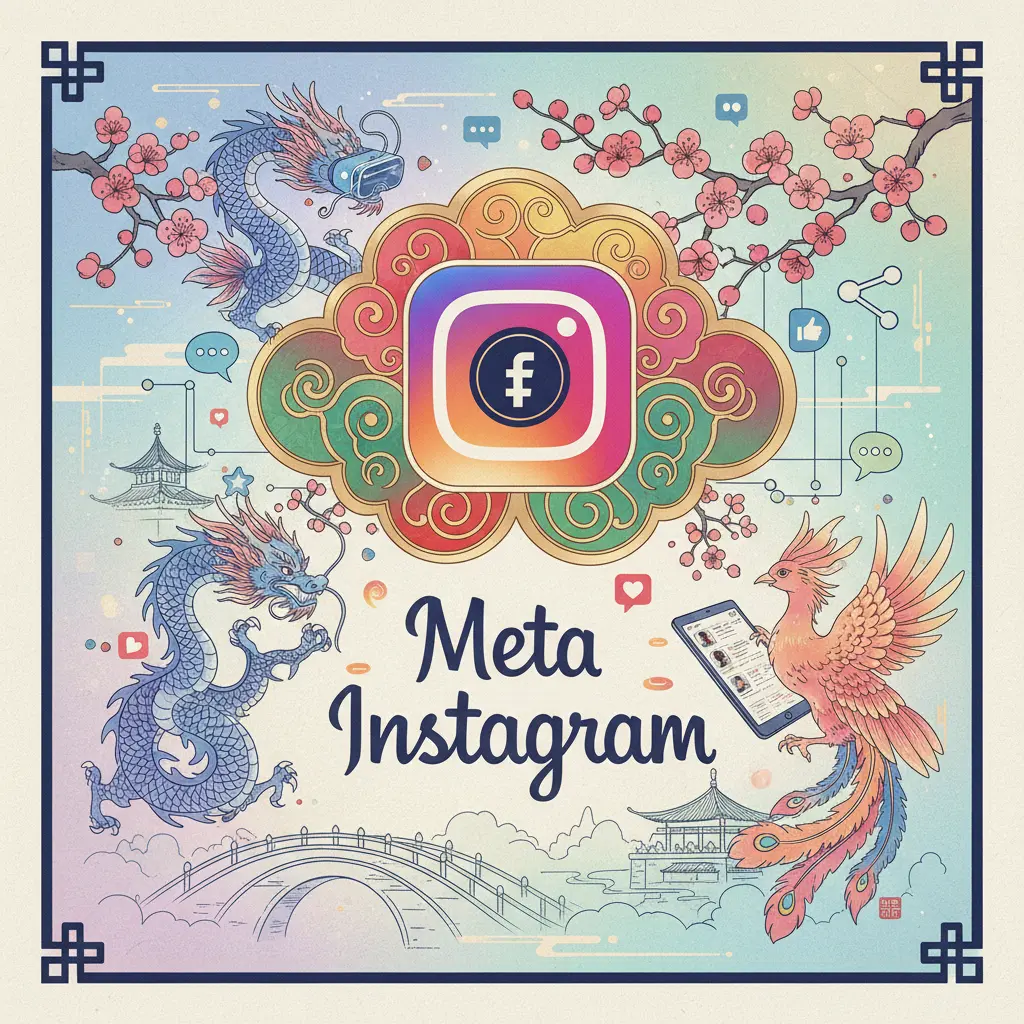
Professional illustration about Instagram
Meta Ads Best Practices
Meta Ads Best Practices for 2025: How to Maximize Your ROI Across Platforms
In 2025, Meta’s advertising ecosystem—spanning Facebook, Instagram, Messenger, WhatsApp, and emerging platforms like Meta Quest and Ray-Ban Meta smart glasses—offers unparalleled opportunities for brands to engage audiences. To stand out, start by leveraging Meta Business Suite for centralized campaign management. This tool streamlines ad creation, performance tracking, and audience targeting across all Meta-owned platforms, saving time while ensuring consistency. For example, a retail brand can use Meta for Business to simultaneously run carousel ads on Instagram, sponsored messages on WhatsApp, and immersive AR try-on ads via Ray-Ban AI glasses, all from a single dashboard.
Audience Targeting and AI-Driven Optimization
Meta’s AI-powered ad tools have evolved significantly, enabling hyper-personalized campaigns. Use Meta AI to analyze user behavior and automatically adjust bids, placements, and creatives in real time. For instance, a travel agency could deploy dynamic ads that showcase tropical vacations to users who recently searched for flights, while highlighting ski resorts to cold-weather enthusiasts. Combine this with lookalike audiences based on high-value customers, and you’ll see higher conversion rates. Don’t overlook augmented reality (AR) and virtual reality (VR) integrations either; interactive ads in the metaverse or through AR wearables like Ray-Ban’s latest models can boost engagement by 30% or more, according to 2025 industry benchmarks.
Creative Best Practices for High-Performing Ads
Visual storytelling is king. For Facebook and Instagram, prioritize short-form video (under 15 seconds) with captions, as 85% of users watch without sound. Test carousel ads for product catalogs or playable ads for app installs. Meanwhile, Messenger and WhatsApp excel with conversational ads—think chatbots offering personalized discounts or booking confirmations. If you’re targeting tech-savvy audiences, experiment with VR headsets-friendly ads, like virtual showrooms for automotive brands. Pro tip: Meta’s 2025 algorithm favors ads with community-building elements, such as user-generated content or polls, so encourage followers to tag your brand.
Budgeting and Performance Tracking
Allocate budgets dynamically based on platform performance. In 2025, Instagram Reels and Facebook Stories often deliver lower CPAs than feed ads, while WhatsApp Click-to-Chat ads excel for lead generation. Use Meta Business Suite’s automated rules to pause underperforming ads and reallocate funds to top converters. For brand awareness, consider splurging on Meta Quest VR placements—like virtual billboards in metaverse games—or sponsoring AR filters tied to Ray-Ban AI glasses. Always A/B test ad copy, CTAs, and landing pages; even small tweaks, like swapping “Buy Now” for “Get Yours Before It’s Gone,” can lift click-through rates by 20%.
Emerging Trends: AR, VR, and the Metaverse
With Meta Quest 3 and next-gen AR wearables gaining traction, forward-thinking advertisers are creating immersive experiences. A furniture brand could let users visualize sofas in their homes via AR, while a fitness app might offer VR headset-compatible workout previews. These formats aren’t just gimmicks—they’re becoming standard for customer engagement. Similarly, Meta AI’s predictive analytics can now forecast seasonal demand spikes, helping you time campaigns perfectly. For example, a Halloween costume retailer could launch augmented reality try-on ads in early October, backed by AI-optimized budgets.
Final Pro Tips
- Always align ads with platform-specific behaviors: Quick purchases on Instagram, detailed demos on Facebook, and instant messaging on WhatsApp.
- Regularly audit Meta for Business reports to identify trends, like rising engagement in VR headsets or declining interest in static images.
- Invest in Meta AI-generated insights to refine audience segments—e.g., targeting “frequent metaverse explorers” for VR-related products.
- Don’t ignore community-building; ads prompting shares or tags often benefit from Meta’s organic reach boost.
By integrating these strategies, your Meta Ads will not only meet but exceed 2025’s performance benchmarks, whether you’re driving sales, leads, or brand awareness.

Professional illustration about Messenger
Meta Privacy Updates
Meta Privacy Updates: Balancing Innovation with User Trust in 2025
Meta’s privacy updates in 2025 reflect its ongoing effort to align cutting-edge technology with growing user expectations for data security. With platforms like Facebook, Instagram, and WhatsApp handling billions of interactions daily, Meta has rolled out granular controls for advertising preferences, allowing users to opt out of AI-driven ad targeting without sacrificing personalized experiences. For instance, Meta Business Suite now includes transparent analytics dashboards, showing brands exactly how customer data is anonymized before being used for lead generation or community building. This shift addresses skepticism around digital advertising while empowering businesses to maintain customer engagement.
The launch of Meta AI and Ray-Ban Meta smart glasses has further complicated privacy conversations. These AR wearables capture real-time environmental data, prompting Meta to introduce on-device processing for sensitive inputs like voice commands. Users can now delete AI glasses recordings directly from their Meta Quest headsets or companion apps—a nod to the "privacy-by-design" ethos. Meanwhile, VR headsets for the metaverse now feature biometric data protections, ensuring facial expressions or motion tracking aren’t stored beyond session durations.
For marketers, these updates mean adapting social media marketing strategies. Brand awareness campaigns must rely less on third-party cookies and more on first-party data collected via Meta’s Business Tools, such as lead forms embedded in Reels. The Meta for Business hub emphasizes ethical data use, offering tutorials on building audiences without overreaching. Job seekers in technology innovation roles should note Meta’s hiring focus on privacy engineers—signaling how deeply these updates are reshaping company culture.
Critics argue Meta’s augmented reality ambitions still pose risks, but 2025’s framework demonstrates measurable progress. Users gain toggle switches for virtual reality data sharing, while developers access stricter API guidelines to prevent misuse. Whether you’re a consumer navigating Messenger’s new end-to-end encryption defaults or a startup leveraging Meta Business Suite, these changes underscore a broader industry truth: Innovation thrives only when users feel in control.

Professional illustration about wearables
Meta Threads Growth
Meta Threads Growth in 2025: How the Platform is Redefining Social Media Engagement
Meta Threads has emerged as one of the fastest-growing social platforms in 2025, seamlessly integrating with Instagram while offering a fresh space for real-time conversations. Unlike traditional platforms like Facebook or Messenger, Threads focuses on text-based discussions, making it a powerful tool for community building and customer engagement. Since its launch, Meta has aggressively expanded Threads’ capabilities, incorporating Meta AI to enhance user interactions and leveraging augmented reality (AR) features to create immersive experiences. Brands are flocking to the platform, recognizing its potential for social media marketing and brand awareness, especially as Meta continues to refine its advertising algorithms for better targeting.
One of the key drivers behind Threads’ rapid adoption is its deep integration with Meta Business Suite, allowing businesses to manage their presence across Instagram, Facebook, and Threads from a single dashboard. This unified approach simplifies business management and improves efficiency, particularly for small businesses looking to scale their digital advertising efforts. Additionally, Threads’ algorithm prioritizes meaningful interactions over viral content, making it easier for brands to foster genuine connections with their audience. For example, companies using Meta for Business tools can now track engagement metrics specific to Threads, such as reply rates and thread depth, to refine their lead generation strategies.
Another factor contributing to Threads’ success is Meta’s investment in technology innovation, particularly in AI and AR. The platform has started testing AI glasses integrations, allowing users to share real-time AR experiences directly from their Ray-Ban Meta smart glasses. This aligns with Meta’s broader vision for the metaverse, where VR headsets and AR wearables will play a central role in social interactions. Early adopters of Ray-Ban AI glasses have reported higher engagement on Threads, as the ability to capture and share moments hands-free encourages more spontaneous and authentic content.
From a career opportunities perspective, Threads has also become a hub for professionals seeking networking and job search avenues. Unlike LinkedIn’s formal environment, Threads offers a more casual space for discussions around company culture, industry trends, and professional growth. Meta has even introduced specialized features for recruiters, such as AI-powered community building tools that match job seekers with relevant opportunities based on their activity.
For marketers, Threads presents a unique challenge: how to balance brevity with depth. Unlike long-form platforms, Threads rewards concise yet engaging content, making it ideal for quick updates, polls, and threaded storytelling. Brands that master this format see higher retention rates, as users are more likely to follow a conversation thread than scroll past a static post. Meta’s continuous updates, including improved business tools and customer engagement analytics, ensure that Threads remains a dynamic space for both personal and professional growth in 2025.
Looking ahead, Meta’s strategy for Threads appears focused on deeper technology innovation, tighter ecosystem integration (especially with WhatsApp and Meta Quest), and enhanced digital advertising capabilities. As the platform evolves, businesses that leverage its unique features—whether through AI-enhanced interactions, AR-powered storytelling, or community-driven discussions—will have a competitive edge in the ever-changing social media landscape.

Professional illustration about metaverse
Meta Quest 4 Features
The Meta Quest 4 is the latest breakthrough in VR headsets, pushing the boundaries of virtual reality with cutting-edge features designed for both gamers and professionals. One of the most notable upgrades is the 4K per-eye resolution, delivering stunning visuals that make the metaverse feel more lifelike than ever. Combined with a 120Hz refresh rate, the Quest 4 eliminates motion blur, ensuring smooth gameplay and immersive experiences—whether you're exploring virtual worlds or attending a business meeting in Meta Horizon Workrooms.
Another game-changing feature is the advanced passthrough mode, which blends augmented reality and virtual reality seamlessly. Using high-resolution cameras and Meta AI-powered depth sensing, the Quest 4 allows users to interact with their physical surroundings while staying immersed in VR. This is a huge leap forward for professionals using AR wearables for training simulations or architects visualizing 3D models in real-world spaces.
The Meta Quest 4 also introduces eye-tracking and facial expression recognition, powered by AI glasses-inspired technology. This not only enhances social interactions in VR but also opens new doors for digital advertising and social media marketing. Imagine brands analyzing real-time emotional responses to ads or customer engagement in virtual storefronts—this is where Meta for Business tools shine.
For creators and developers, the Quest 4 supports hand-tracking 2.0, eliminating the need for controllers in many applications. Whether you're sculpting in 3D or navigating Meta Business Suite dashboards, intuitive gestures make workflows faster and more natural. Plus, with Wi-Fi 6E and 5G compatibility, streaming high-fidelity VR content or collaborating in real-time is smoother than ever.
Gamers will appreciate the expanded haptic feedback system, which now includes full-body vibration support for deeper immersion. Paired with the new Touch Pro controllers, featuring adaptive triggers and improved battery life, the Quest 4 sets a new standard for technology innovation in gaming.
Finally, Meta has integrated tighter ecosystem connectivity, letting users seamlessly switch between Facebook, Instagram, and Messenger without leaving VR. This is a strategic move to strengthen community building and brand awareness within the metaverse. Whether you're networking for job search opportunities or hosting virtual events, the Quest 4 is designed to keep you connected.
For businesses, the Meta Quest 4 isn’t just a gadget—it’s a business tool for lead generation, training, and remote collaboration. With Meta AI enhancements and compatibility with Ray-Ban Meta smart glasses, the line between physical and digital worlds continues to blur, making this headset a must-have for forward-thinking professionals.
Meta Reels Strategies
Meta Reels Strategies for 2025: How to Dominate Short-Form Video Marketing
If you're not leveraging Meta Reels in 2025, you're missing out on one of the most powerful tools for brand awareness, customer engagement, and lead generation. With Facebook and Instagram prioritizing short-form video content, Reels have become a non-negotiable part of any social media marketing strategy. Here’s how to optimize your approach for maximum impact.
1. Understand the Algorithm & Optimize for Engagement
The Meta AI-powered algorithm favors Reels that keep users watching longer. To boost visibility:
- Hook viewers in the first 3 seconds—use bold captions, trending sounds, or unexpected visuals.
- Encourage interaction by asking questions, using polls, or prompting shares.
- Leverage trending audio—Meta’s algorithm prioritizes clips using popular tracks.
For example, brands like Ray-Ban Meta use Reels to showcase their AI glasses in action, pairing quick demos with trending music to drive engagement.
2. Align Reels with Broader Meta Ecosystem Strategies
Reels shouldn’t exist in isolation—integrate them with:
- Meta Business Suite: Schedule Reels alongside Stories and feed posts for consistent messaging.
- WhatsApp & Messenger: Share behind-the-scenes Reels in private chats to nurture leads.
- Meta for Business: Use insights to refine content based on performance data.
A fitness brand could post a Reel on Instagram, then retarget engaged users with a Meta Quest VR workout ad, creating a seamless cross-platform experience.
3. Experiment with AR & Interactive Features
With augmented reality exploding in 2025, brands can:
- Use Instagram’s AR filters to let users "try on" products like Ray-Ban AI glasses.
- Create gamified Reels (e.g., "Guess the product" challenges) to boost shares.
- Partner with creators to demo VR headsets or AR wearables in action.
4. Repurpose Top-Performing Content
Turn your best-performing Meta Reels into:
- Snippets for Facebook ads.
- Tutorials for Messenger customer support.
- Teasers for metaverse events (e.g., virtual product launches).
For instance, a tech company could repurpose a Reel showcasing Meta AI tools into a carousel ad highlighting key features.
5. Leverage UGC & Community Building
User-generated content (UGC) builds trust and scales production. Try:
- Running hashtag challenges (e.g., #MyMetaQuestAdventure).
- Featuring customer testimonials in Reels.
- Collaborating with micro-influencers to expand reach.
A travel brand might incentivize followers to share Reels of their trips using Ray-Ban Meta glasses, then reshare the best clips.
6. Stay Ahead of Trends
Meta’s tools evolve fast—keep an eye on:
- New AI glasses integrations (e.g., real-time translation captions in Reels).
- Updates to Meta Business Suite analytics for deeper performance tracking.
- Shifts in digital advertising policies to avoid penalties.
By combining these strategies, businesses can turn Meta Reels into a cornerstone of their social media marketing, driving everything from brand awareness to job search visibility for recruiters. The key? Test, iterate, and let data guide your creativity.
Meta Business Tools
In 2025, Meta Business Tools have evolved into an indispensable ecosystem for brands, entrepreneurs, and marketers aiming to dominate the digital landscape. At the core of this suite is the Meta Business Suite, a unified dashboard that streamlines operations across Facebook, Instagram, and Messenger. Whether you're managing ad campaigns, scheduling posts, or analyzing audience insights, this tool eliminates the need to juggle multiple platforms. For example, a small business can now track customer inquiries from Instagram DMs alongside Facebook comments, all while monitoring ad performance in real time—saving hours of manual work.
The integration of Meta AI has taken these tools to the next level, offering predictive analytics for ad targeting and automated responses to common customer queries. Imagine deploying AI-powered chatbots on WhatsApp to handle order confirmations or using Meta AI to generate hyper-personalized ad copy based on user behavior. This isn’t just about efficiency; it’s about creating seamless, scalable customer experiences. Brands leveraging these AI-driven features report higher engagement rates, with some seeing a 30% boost in lead generation thanks to smarter audience segmentation.
For businesses diving into the metaverse, Meta Quest and AR wearables like the Ray-Ban Meta smart glasses are game-changers. Retailers are using VR headsets to host virtual showrooms, while service providers offer immersive training sessions through Meta Quest. The Ray-Ban AI glasses, equipped with augmented reality overlays, enable field technicians to access manuals hands-free or allow sales teams to pull up product specs during client meetings. These tools aren’t just futuristic gadgets—they’re practical solutions for bridging physical and digital workflows.
Advertising on Meta’s platforms has also gotten smarter. With advancements in digital advertising, businesses can now launch cross-platform campaigns that dynamically adapt based on real-time data. For instance, a fashion brand can run a single ad creative that automatically adjusts its format for Instagram Stories, Facebook feeds, and Messenger ads, maximizing reach without extra effort. The Meta for Business hub provides tutorials and case studies to help brands master these innovations, from social media marketing strategies to leveraging augmented reality filters for viral campaigns.
Community building remains a priority, and Meta’s tools excel here too. Features like Facebook Groups and Instagram’s Collaborative Posts empower brands to foster loyalty and co-create content with their audience. A fitness app, for example, could use Groups to host challenges, while a B2B company might use Messenger Rooms for live Q&As. The key is consistency—Meta’s algorithms reward active engagement, so businesses that regularly interact with their communities see better organic reach.
Finally, for those exploring career opportunities or job search within Meta’s ecosystem, the company’s emphasis on technology innovation and company culture makes it a top contender. From roles in AI development to metaverse design, Meta’s business tools aren’t just for external use; they’re also shaping how the company operates internally. Professionals skilled in these platforms are in high demand, as brands increasingly seek experts who can navigate Meta’s ever-expanding toolkit.
Whether you’re a startup or an enterprise, Meta Business Tools in 2025 offer something transformative—if you know how to use them. The blend of AI, AR/VR, and unified management features creates endless possibilities for growth, customer engagement, and brand awareness. The question isn’t whether to adopt these tools, but how quickly you can integrate them into your strategy.
Meta Horizon Worlds
Meta Horizon Worlds is Meta's flagship virtual reality (VR) platform, designed to redefine how people connect, work, and play in the metaverse. As of 2025, the platform has evolved into a dynamic ecosystem where users can explore immersive environments, attend virtual events, and even monetize their creations. Powered by Meta Quest VR headsets, Horizon Worlds blends augmented reality (AR) and virtual reality (VR) to create interactive experiences that go beyond traditional social media platforms like Facebook or Instagram. Whether you're a gamer, entrepreneur, or creative professional, Horizon Worlds offers tools to build custom spaces, host meetings, or showcase branded content—making it a game-changer for social media marketing and community building.
One of the standout features of Horizon Worlds is its integration with Meta for Business, allowing companies to leverage VR for customer engagement and brand awareness. Imagine hosting a product launch in a virtual auditorium or training employees in a simulated workspace—these are just a few ways businesses are using the platform. The Meta Business Suite further streamlines these efforts by providing analytics and ad tools tailored for VR environments. For instance, a fashion brand could create a virtual storefront where users try on digital versions of Ray-Ban Meta glasses or other AR wearables, bridging the gap between online shopping and real-world experiences.
Creators are also thriving in Horizon Worlds, thanks to its robust toolkit for designing and monetizing virtual spaces. From hosting paid workshops to selling digital assets, the platform empowers users to turn their ideas into income streams. This aligns with Meta's broader vision of fostering technology innovation in the metaverse. Meanwhile, Meta AI enhances interactions within Horizon Worlds, offering smart assistants that guide users or personalize experiences based on preferences. Pair this with Ray-Ban AI glasses, and you’ve got a seamless blend of physical and digital worlds—perfect for professionals who need hands-free access to VR content.
For marketers, Horizon Worlds presents unique opportunities in digital advertising. Unlike static ads on Messenger or WhatsApp, VR ads are interactive, allowing users to engage with products in 3D. A car dealership, for example, could let customers test-drive a virtual vehicle, while a travel agency might offer immersive previews of destinations. These strategies not only boost lead generation but also create memorable experiences that traditional social media marketing can’t match.
On the career front, Horizon Worlds is opening doors in job search and company culture. Remote teams use the platform for collaborative projects, and recruiters host virtual job fairs where candidates explore office environments or network with employees. It’s a testament to how VR is reshaping business tools and workplace dynamics. As Meta continues to innovate, Horizon Worlds remains at the forefront of the metaverse—offering endless possibilities for entertainment, commerce, and connection in 2025 and beyond.
Meta E-commerce Trends
Meta E-commerce Trends in 2025: How Brands Are Leveraging AI, AR, and Social Commerce
The e-commerce landscape is evolving rapidly, and Meta is at the forefront with innovative tools that blend augmented reality (AR), virtual reality (VR), and AI-driven shopping experiences. In 2025, businesses are capitalizing on Meta’s ecosystem—spanning Facebook, Instagram, WhatsApp, and Messenger—to create seamless, immersive shopping journeys. For instance, AR wearables like the Ray-Ban Meta smart glasses now enable customers to virtually try on products, from sunglasses to apparel, directly through Instagram filters or the Meta Quest VR headset. This try-before-you-buy approach reduces returns and boosts conversion rates, especially in fashion and beauty niches.
Another game-changer is Meta AI, which powers personalized shopping assistants across platforms. Imagine a customer messaging a brand on WhatsApp and receiving real-time product recommendations powered by AI glasses that analyze their preferences or past purchases. Brands like Sephora and Nike are already using this tech to streamline customer engagement. Meanwhile, Meta Business Suite has become indispensable for entrepreneurs, offering unified analytics and ad management tools to track performance across Facebook Shops, Instagram Checkout, and Messenger chatbots.
Social commerce is also thriving, with shoppable posts and live-stream shopping events dominating Instagram and Facebook. In 2025, influencers and brands collaborate in the metaverse to host virtual pop-up stores, where users interact with products using their VR headsets. For example, a makeup brand might host a metaverse launch event where attendees can test shades via Ray-Ban AI glasses and purchase instantly.
For B2B companies, Meta for Business tools like lead generation ads and community-building features are critical. A roofing company could use Facebook’s targeted advertising to reach homeowners in specific ZIP codes, while a SaaS startup might leverage Messenger automation to qualify leads. The key? Blending digital advertising with authentic engagement—like hosting Q&A sessions in Facebook Groups or sharing behind-the-scenes reels on Instagram to humanize the brand.
Finally, Meta’s advancements in AI and AR wearables are reshaping job roles too. E-commerce managers now need skills in metaverse merchandising and AR campaign optimization, while marketers must master Meta’s AI-driven ad algorithms. Whether you’re a small business or a global retailer, staying ahead means embracing these trends—because in 2025, the line between physical and digital shopping is vanishing faster than ever.
Meta Workplace Updates
Meta Workplace Updates: Powering the Future of Business Collaboration
Meta continues to redefine workplace collaboration with cutting-edge tools designed for seamless communication, productivity, and innovation. The integration of Meta Workplace, Facebook, Instagram, and Messenger into a unified ecosystem allows teams to streamline workflows while maintaining brand consistency. For businesses leveraging Meta for Business, the platform offers advanced features like AI-driven analytics in Meta Business Suite, enabling data-backed decisions for digital advertising and customer engagement.
One standout update is the enhanced Meta Quest integration, transforming how remote teams interact through virtual reality meetings. Imagine hosting a global product launch in a metaverse boardroom—complete with 3D prototypes and real-time feedback. Meanwhile, Ray-Ban Meta smart glasses are pushing boundaries in augmented reality, offering hands-free access to project updates or client briefs during site visits. These AR wearables aren’t just gadgets; they’re productivity game-changers for industries like architecture or field service management.
On the communication front, WhatsApp Business now supports automated workflows for lead generation, from instant responses to payment reminders. Pair this with Meta AI tools that analyze chat trends, and businesses gain unparalleled insights into community building and pain points. For creative teams, Instagram’s updated collaboration features let brands co-create content with influencers directly within the app, boosting brand awareness without switching platforms.
Looking ahead, Meta’s investment in AI glasses and VR headsets signals a shift toward immersive work environments. Early adopters report faster onboarding using VR simulations, while AI-powered social media marketing tools predict trends before they peak. Whether you’re optimizing advertising campaigns or exploring career opportunities in tech, Meta’s updates emphasize agility—blending technology innovation with practical business tools to stay ahead in 2025’s competitive landscape.
Pro Tip: Small businesses can leverage Meta Workplace’s template library for quick-start guides on everything from job search strategies to fostering company culture in hybrid settings. The key? Consistently testing new features—like live shopping via Messenger—to discover what resonates with your audience.
Meta Smart Glasses
Meta Smart Glasses are redefining how we interact with augmented reality (AR) and the metaverse in 2025. The latest iteration, Ray-Ban Meta Smart Glasses, combines cutting-edge Meta AI with sleek Ray-Ban design, offering hands-free access to social media, messaging, and even digital advertising tools. Unlike traditional wearables, these glasses seamlessly integrate with Meta's ecosystem, including WhatsApp, Instagram, and Messenger, allowing users to capture photos, record videos, or even live-stream directly from their lenses. For businesses, this opens up innovative opportunities for social media marketing and customer engagement, as brands can now create immersive AR experiences without requiring customers to download separate apps.
One of the standout features is the AI-powered assistant embedded in the glasses. Users can ask questions, get real-time translations, or even receive personalized recommendations—all through voice commands. For professionals, this means quicker access to business tools like Meta Business Suite, enabling on-the-go management of ad campaigns or community building efforts. The glasses also support AR wearables-specific apps, such as virtual showrooms or interactive tutorials, which are becoming increasingly popular in industries like retail and education. Imagine a sales rep demonstrating a product through AR overlays during a client meeting or a teacher guiding students through a 3D historical reconstruction—all without needing a VR headset.
From a technical standpoint, the 2025 models boast significant upgrades in battery life, processing power, and display clarity. The Ray-Ban AI glasses now feature a wider field of view and improved low-light performance, making them more versatile for both daytime and nighttime use. They’re also designed to work in tandem with Meta Quest devices, bridging the gap between augmented reality and virtual reality. This interoperability is a game-changer for developers and marketers alike, as it allows for cohesive experiences across platforms. For instance, a user might start an AR scavenger hunt via their smart glasses and then switch to a VR headset for the final puzzle—a seamless transition that enhances brand awareness and lead generation.
For businesses looking to leverage this technology, the key is to focus on technology innovation that aligns with user behavior. Simple yet effective strategies include creating AR filters for Instagram campaigns or developing mini-games that encourage social sharing. Since the glasses sync with Meta for Business tools, companies can track engagement metrics in real time, adjusting campaigns for maximum impact. Additionally, the rise of digital advertising through AR means brands can now place virtual billboards or product demos in physical spaces, reaching audiences in entirely new ways. For job seekers, familiarity with these tools can open doors to career opportunities in AR/VR development, social media marketing, or even company culture consulting, as more organizations adopt these technologies for training and collaboration.
The societal implications are equally noteworthy. As Meta Smart Glasses become more mainstream, they’re shaping how we perceive privacy, connectivity, and even community building. For example, wearers can join AR-based local events or participate in global meetups—all through their lenses. However, this also raises questions about data security and digital fatigue, topics that businesses must address transparently to maintain trust. Overall, Meta’s foray into smart glasses isn’t just about hardware; it’s a bold step toward blending the physical and digital worlds, offering endless possibilities for both personal and professional use. Whether you’re a tech enthusiast, a marketer, or a business owner, staying ahead of this trend is crucial in 2025’s fast-evolving digital landscape.
Meta Cloud Gaming
Meta is pushing the boundaries of cloud gaming by integrating its Meta Quest VR headsets, AI-powered tools, and metaverse infrastructure to create seamless, high-performance gaming experiences. Unlike traditional cloud gaming platforms, Meta’s approach leverages augmented reality (AR) and virtual reality (VR) to deliver immersive gameplay without the need for expensive hardware. For instance, users can stream graphically intensive games directly to their Meta Quest 3 or even through Facebook Gaming, making high-end gaming accessible to a broader audience.
One of the standout innovations is Meta’s focus on social gaming within the metaverse. Players can join virtual worlds, interact with friends via Messenger or Instagram integrations, and even attend live in-game events—all while leveraging Meta’s advertising ecosystem to discover new titles. This creates a unique blend of entertainment and community building, where gamers aren’t just passive players but active participants in a shared digital space.
For businesses, Meta Cloud Gaming opens doors for brand awareness and customer engagement. Imagine hosting a virtual product launch in a VR game or using Meta Business Suite to target ads to gamers based on their play habits. The potential for lead generation is massive, especially as Meta continues to refine its AI-driven recommendations and digital advertising tools. Plus, with Ray-Ban Meta smart glasses and AR wearables on the rise, the line between gaming and real-world interactions is blurring—think scavenger hunts in AR or VR fitness classes that sync with your social feed.
From a technology innovation perspective, Meta is betting big on AI glasses and VR headsets to reduce latency and improve streaming quality. Their proprietary AI optimizes game rendering in real-time, ensuring smooth gameplay even on modest internet connections. And with Meta AI integrations, future games could feature dynamic NPCs (non-player characters) that adapt to your playstyle, thanks to machine learning.
For job seekers, this booming sector offers career opportunities in AI development, cloud infrastructure, and social media marketing—roles that are critical to shaping the future of Meta Cloud Gaming. Whether you’re a developer, a marketer, or a content creator, understanding how Meta’s ecosystem works could give you a competitive edge in this rapidly evolving industry.
In short, Meta isn’t just building games; it’s crafting interconnected experiences that bridge gaming, social media, and business tools—all powered by cutting-edge AR/VR tech and AI advancements. The result? A gaming landscape that’s more immersive, social, and accessible than ever before.
Meta Future Predictions
Meta Future Predictions: What to Expect from the Tech Giant in 2025 and Beyond
As we move deeper into 2025, Meta continues to push boundaries in augmented reality (AR), virtual reality (VR), and AI-driven innovation. With Meta Quest leading the charge in VR headsets and Ray-Ban Meta evolving into advanced AI glasses, the company is reshaping how we interact with digital and physical worlds. Experts predict Meta will double down on its metaverse vision, integrating immersive experiences across Facebook, Instagram, and WhatsApp—making social interactions more dynamic through lifelike avatars, 3D spaces, and AI-powered personalization.
One game-changing area is Meta AI, which is expected to revolutionize customer engagement and social media marketing. Imagine AI-generated content that adapts to user preferences in real-time or chatbots in Messenger that handle complex queries seamlessly. For businesses, Meta for Business tools like Meta Business Suite will likely introduce smarter analytics, automating ad placements and optimizing digital advertising campaigns with predictive algorithms. Brands could leverage these features to boost brand awareness and lead generation without heavy manual oversight.
Another exciting frontier is AR wearables. The next-gen Ray-Ban AI glasses might feature enhanced object recognition, real-time translation, and even health monitoring—transforming them from cool accessories into indispensable daily tools. Meta’s investment in technology innovation suggests these devices could soon replace smartphones for tasks like navigation or shopping, especially as the metaverse becomes more accessible.
On the enterprise side, expect Meta Business Suite to expand its business management capabilities, offering deeper insights into community building and audience behavior. Small businesses could benefit from AI-curated recommendations for advertising strategies, while recruiters might use VR-powered job search platforms to host virtual interviews in immersive environments. This shift could redefine company culture, making remote collaboration feel as natural as in-person interactions.
However, challenges remain. Privacy concerns around Meta AI data usage and the affordability of high-end VR headsets could slow adoption. Yet, if Meta balances innovation with transparency, 2025 could solidify its position as a leader in augmented reality, virtual reality, and AI-driven business tools—ushering in a new era of connected digital experiences.